Engaging Minds. Building Skills

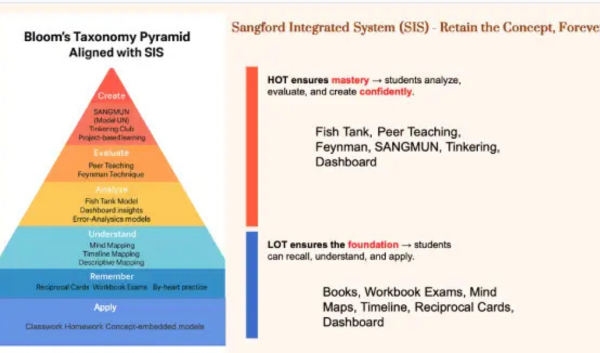
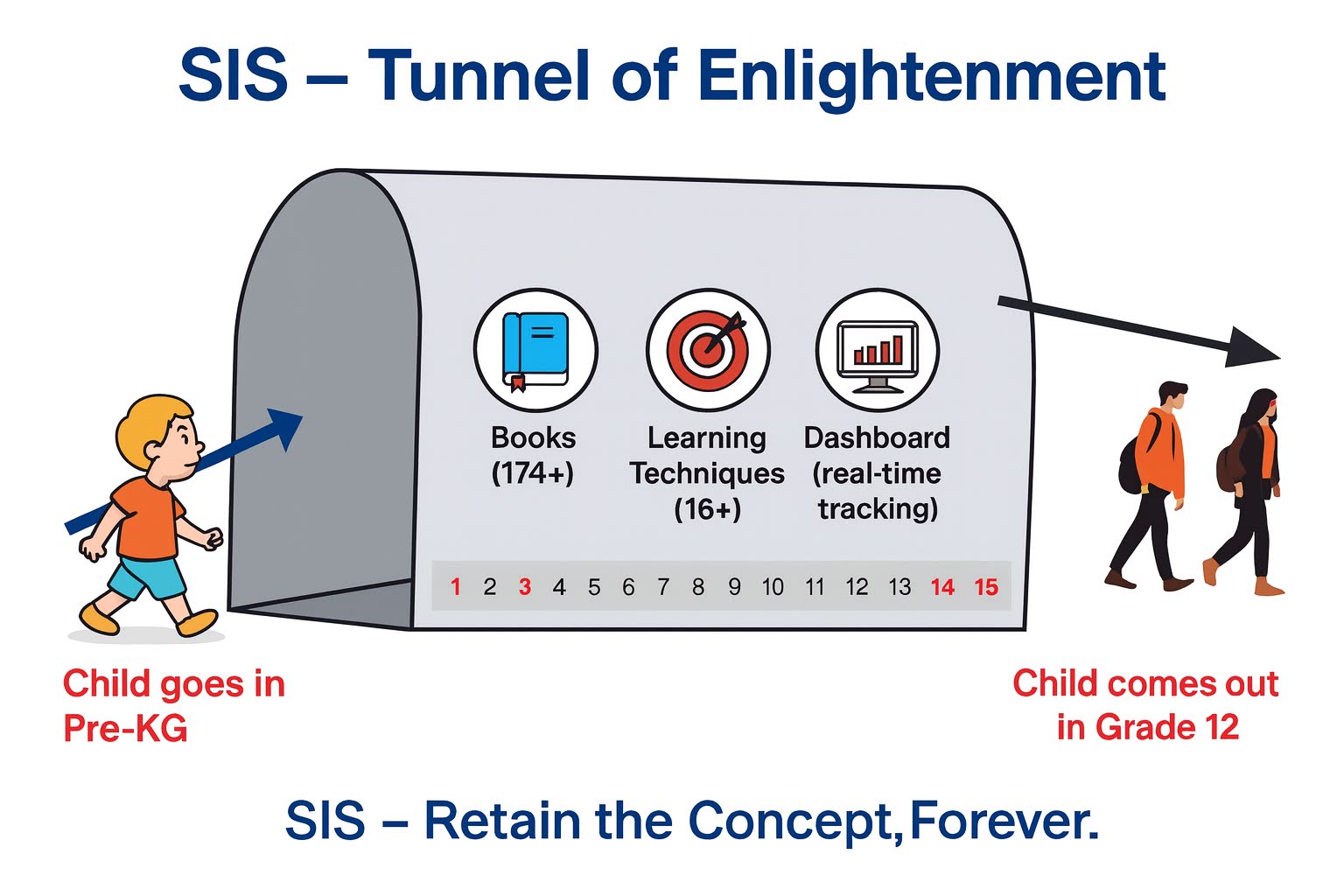
At Stanford Learning, we believe that how students learn is just as important as what they learn. Our classrooms integrate 16+ signature, research-backed techniques that foster active participation, peer-driven knowledge sharing, leadership development, and deep conceptual understanding.

From the early grades through senior levels, every Stanford classroom is designed to be a vibrant, engaging space—built on dynamic discussions, real-world simulations, and hands-on experiences that make learning joyful, memorable, and impactful.

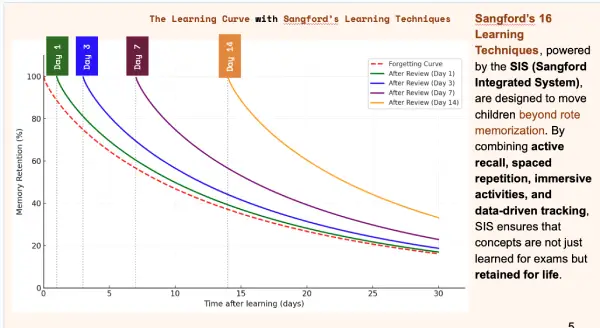
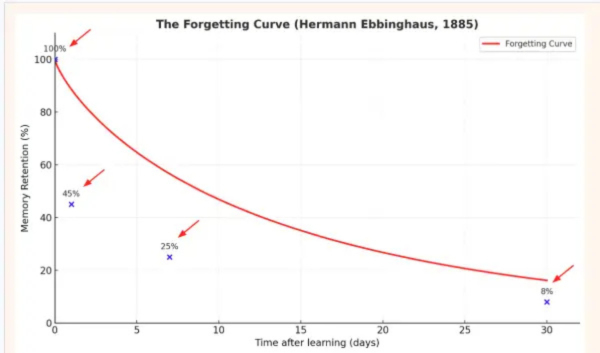
These techniques intentionally support Active Recall and Spaced Repetition, helping students revisit, apply, and retain key concepts over time. The result is long-term understanding, measurable growth, and steady improvement of the learning curve—moving students from basic comprehension to confident mastery with every lesson.
LEARNING TECHNIQUES

Fish Tank Model

Live, structured student discussions with rotating observation roles — building communication, attentive listening, and speaking confidence.

Walk on the Map

Interactive geography sessions using giant floor maps to enhance spatial awareness, global perspectives, and memory retention.

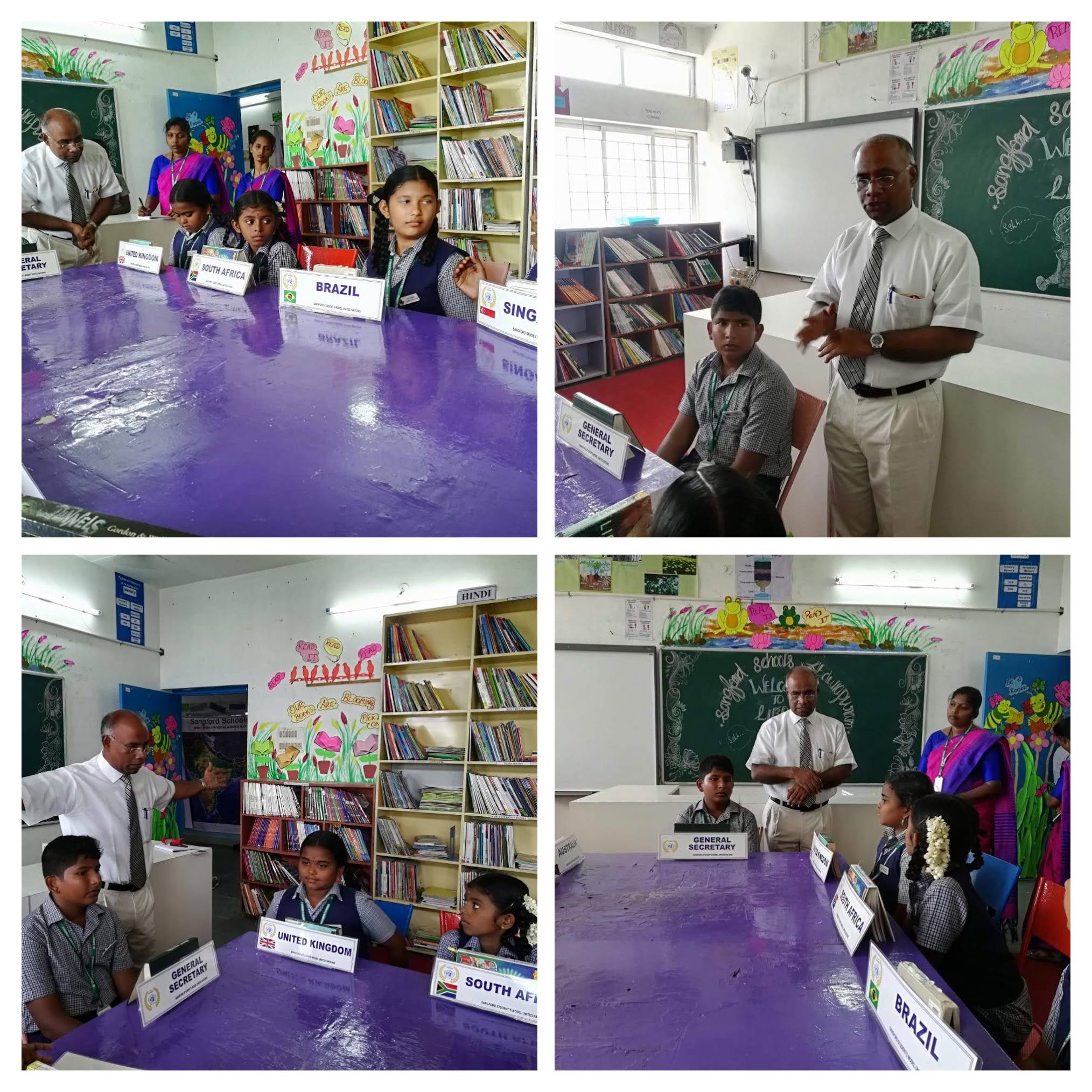
SANGMUN (Model United Nations)

Student-led UN simulations that cultivate diplomacy, structured debate, public speaking, and global citizenship.

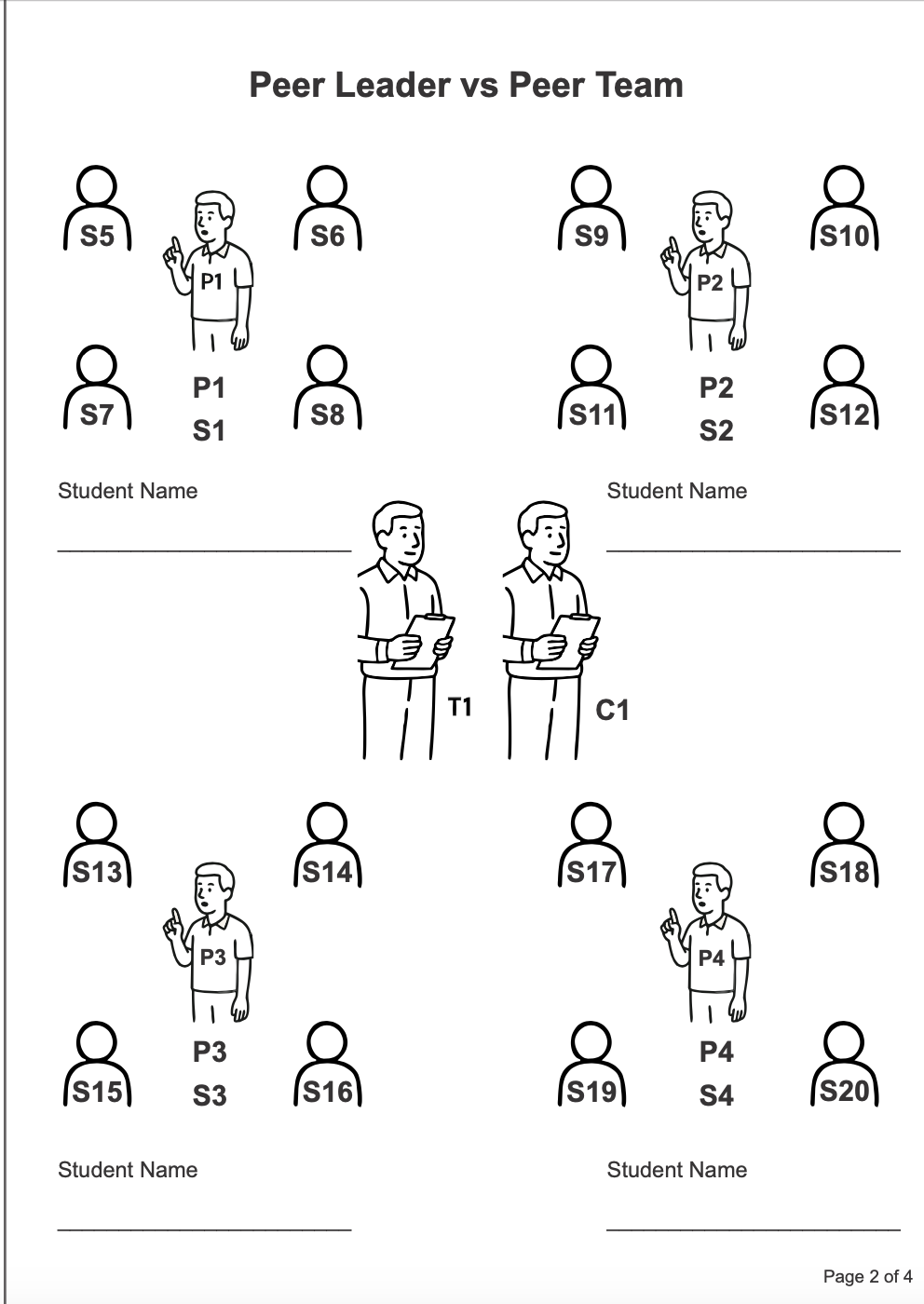
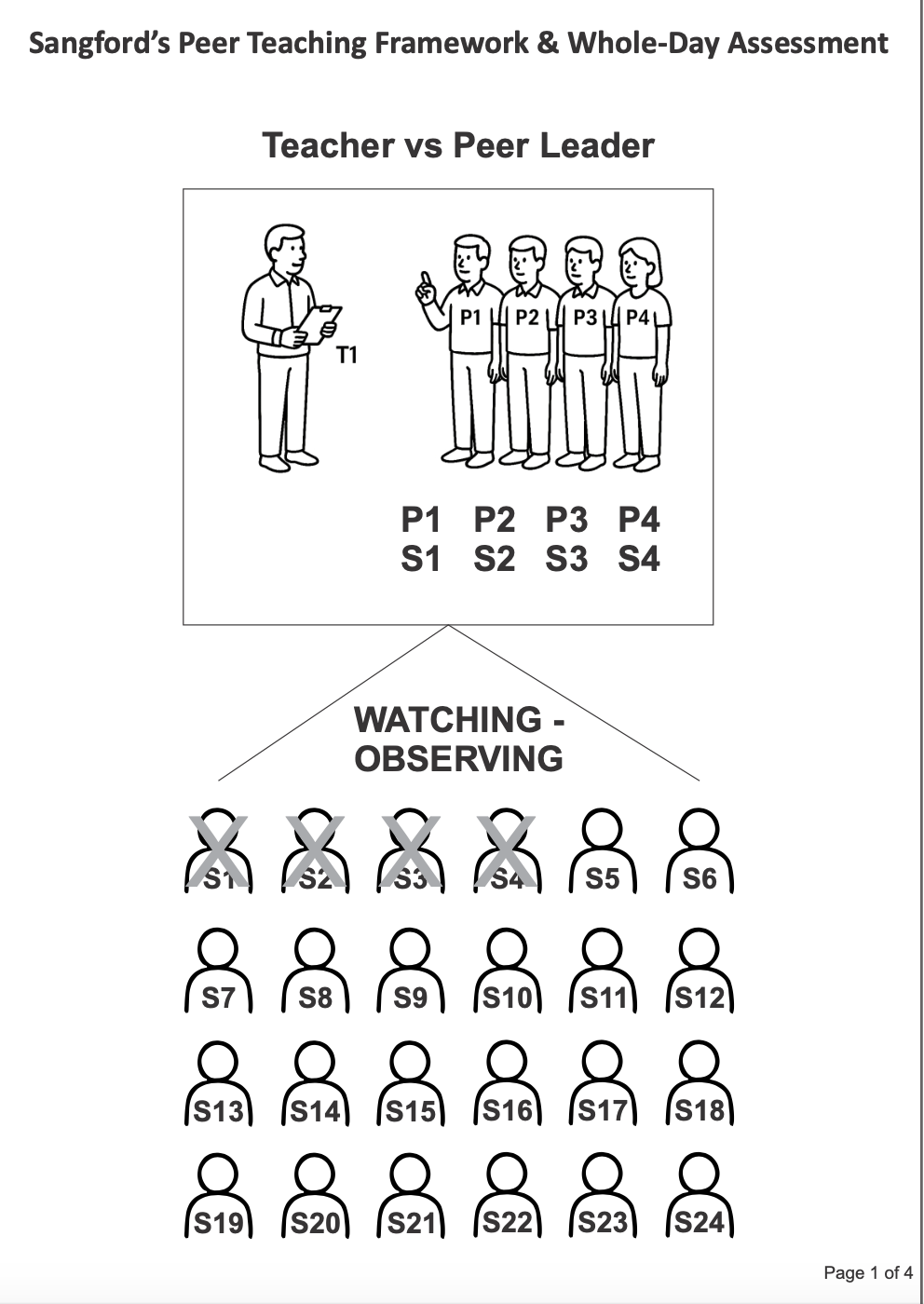
Peer Teaching Framework

Students teach their peers in collaborative settings — strengthening subject mastery, leadership, and mutual respect.

Thinkering Club

Hands-on sessions with circuits, gadgets, and experiments — making STEM concepts tangible, exciting, and innovative.

Reciprocal Cards

Fast-paced, daily flashcard recall sessions reinforcing vocabulary, formulas, and key concepts through active memory.

Hygge Time

A structured routine focused on happiness, mindfulness, empathy, and positive classroom culture.

Feynman Technique

Mastery through teaching — students explain complex topics in simple terms to deepen comprehension and long-term retention.

Circular Learning

Peer-to-peer relay discussions that encourage confident speaking, focused listening, and collaborative problem-solving.

Descriptive & Timeline Mapping

Visual tools connecting historical events and key ideas — making abstract concepts concrete and memorable.

Mind Mapping

Organizing complex subjects into visual, structured maps that boost creativity, comprehension, and recall.

Concept-Embedded Practical Models

Durable, reusable classroom models that transform abstract academic concepts into visible, hands-on demonstrations.

Active Recall Techniques

Short, daily recall sessions integrated into lessons to reinforce core concepts and build exam readiness.

Leadership Building Activities

Classroom routines that nurture public speaking, confidence, ethical decision-making, and teamwork from an early age.

Academic Club: Sangford Innovation Club

Technique: Interactive Leadership & Communication

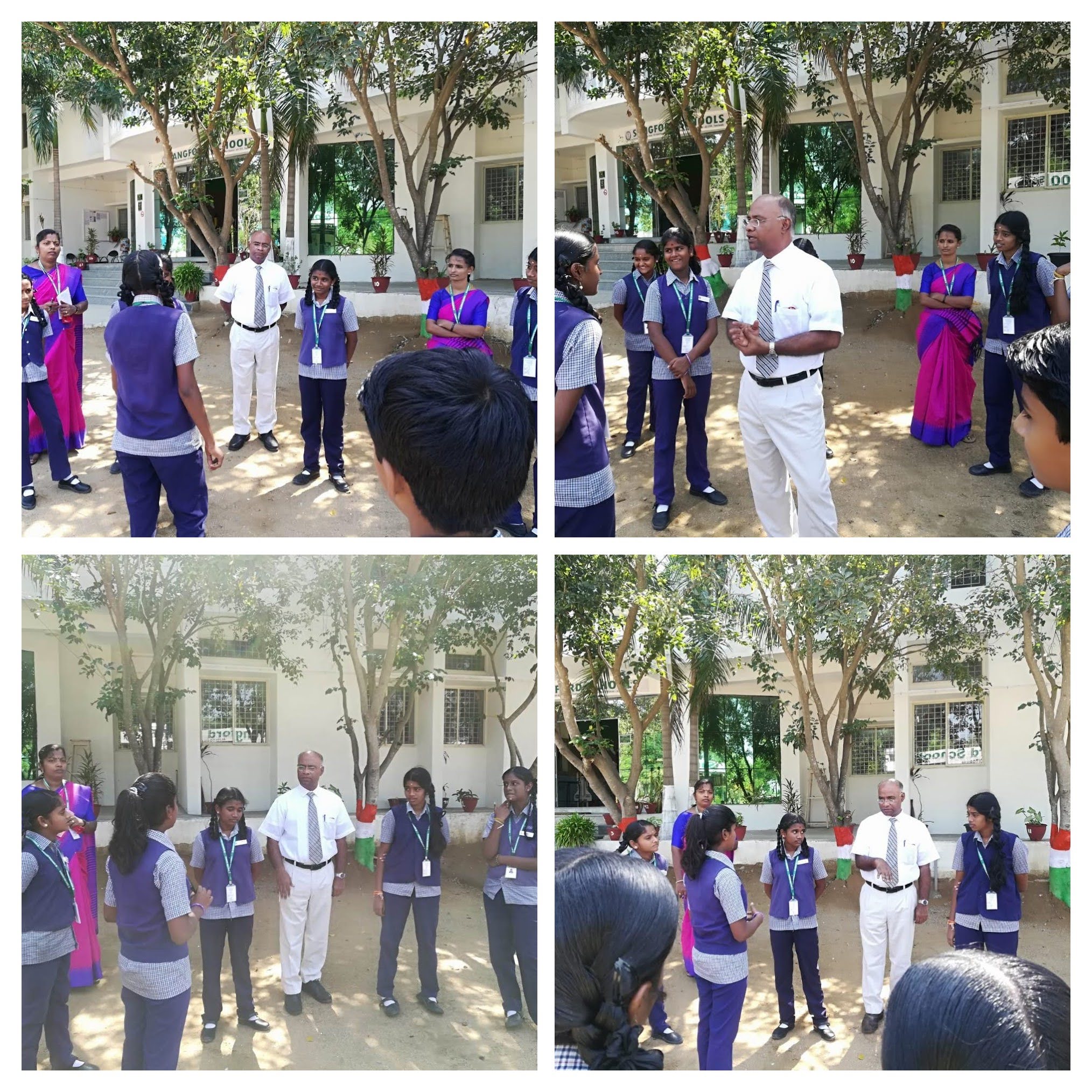
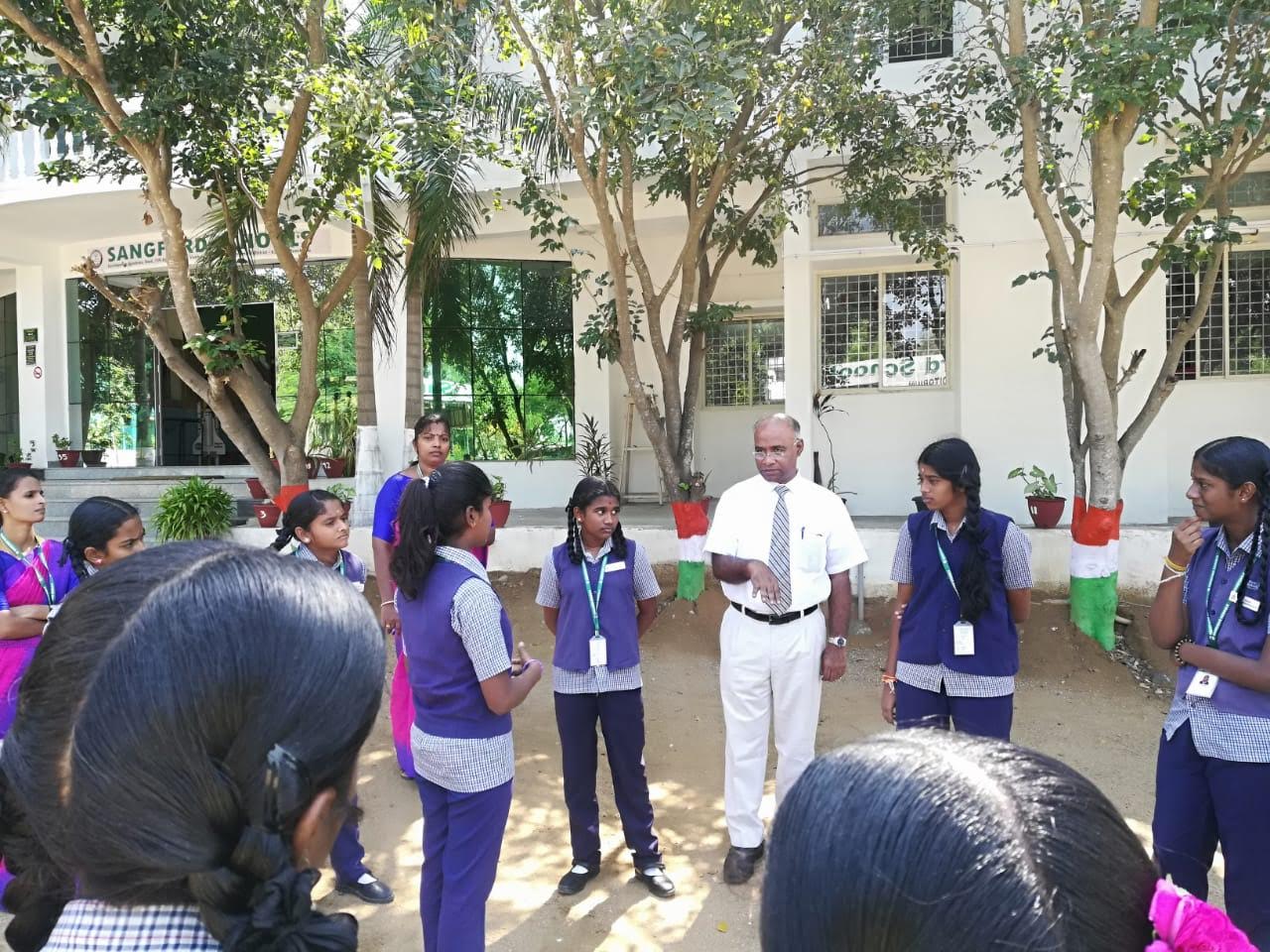
The Fish Tank Model creates a dynamic learning space where a small group of students actively discuss or problem-solve in the center while the rest observe silently from the outside circle. This method develops deeper listening, reflective observation, and thoughtful communication skills in a live setting.

Why It’s Easy and Impactful to Learn:

Observation-Based Learning → Students improve listening and reflective thinking by watching peers’ discussion techniques.

Real-Time Feedback → Observers note positive communication traits (tone, body language, respect) for later discussion.

Safe Speaking Environment → The inner circle builds confidence while the outer circle models good dialogue.

Improves Group Discussion Skills → Strengthens articulation and reasoning for social science, leadership, and language classes.

Builds Respect and Patience → Everyone participates, observes, and reflects — reducing interruptions and promoting structured speaking habits.

This method transforms classrooms into active-thinking environments, preparing students for collaborative discussions, public speaking, and leadership interactions through simple yet effective peer modeling.

Learning Technique – Fish Tank Model

Academic Club: Sangford Student’s Model United Nations

Technique: Interactive Social Science Learning

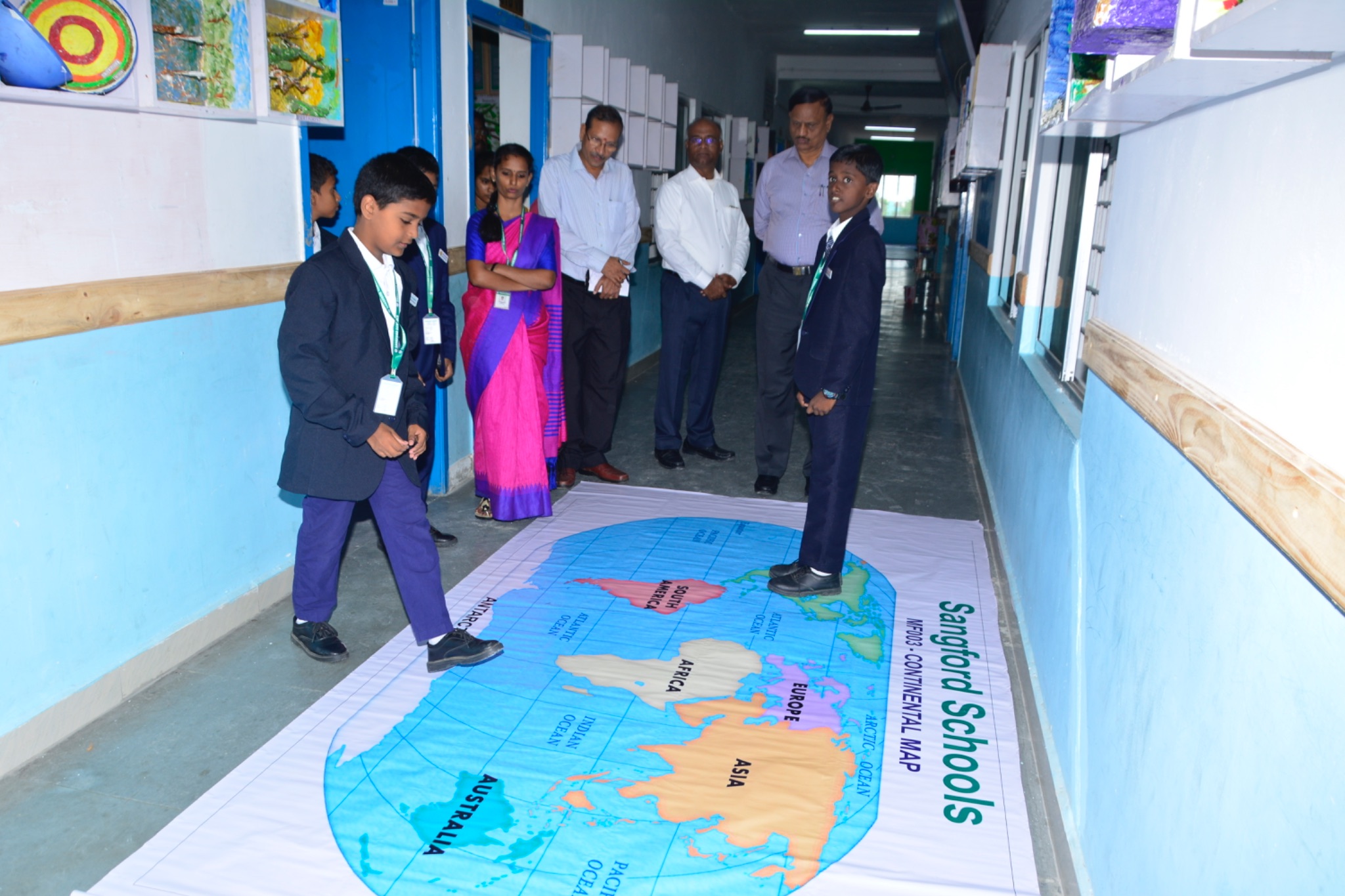
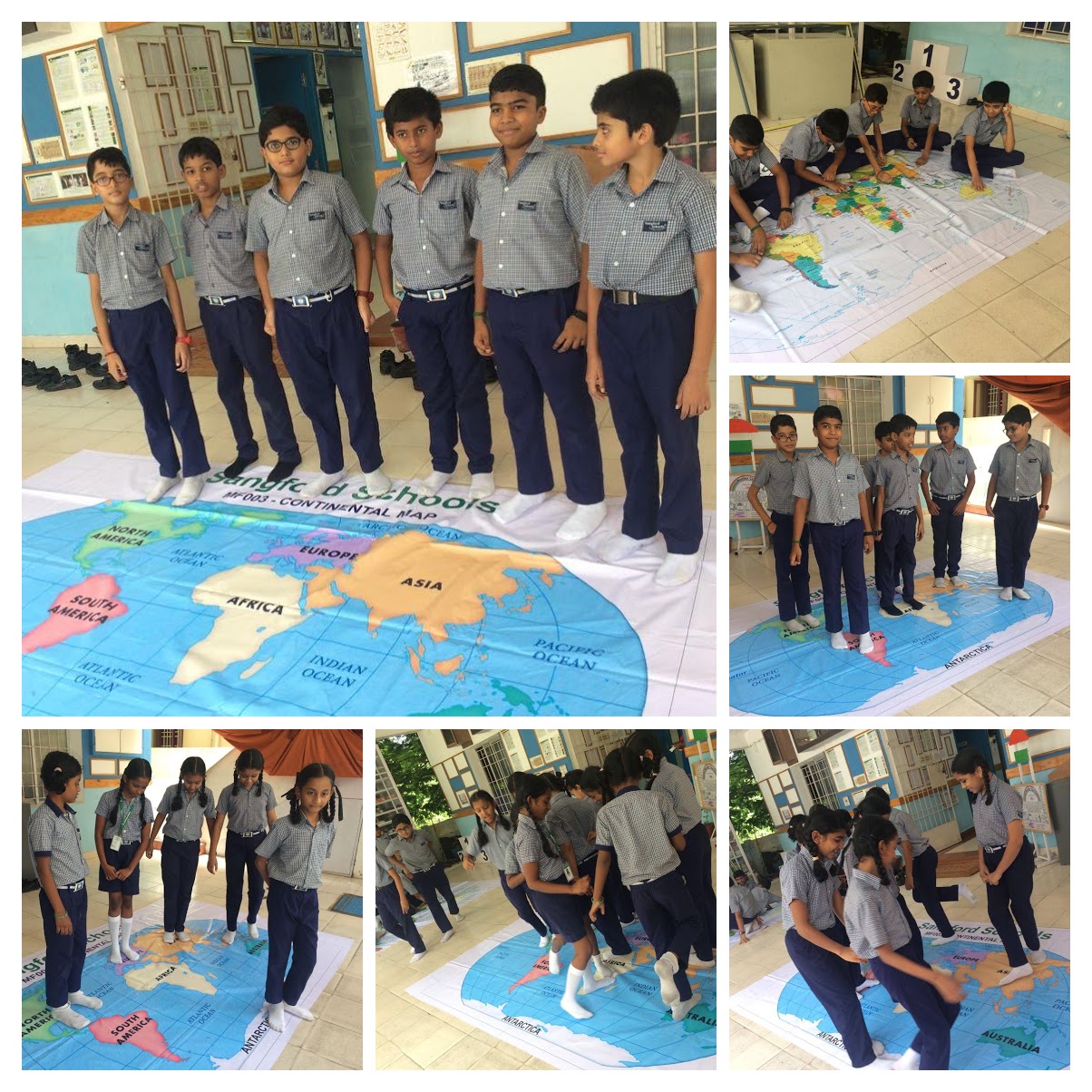
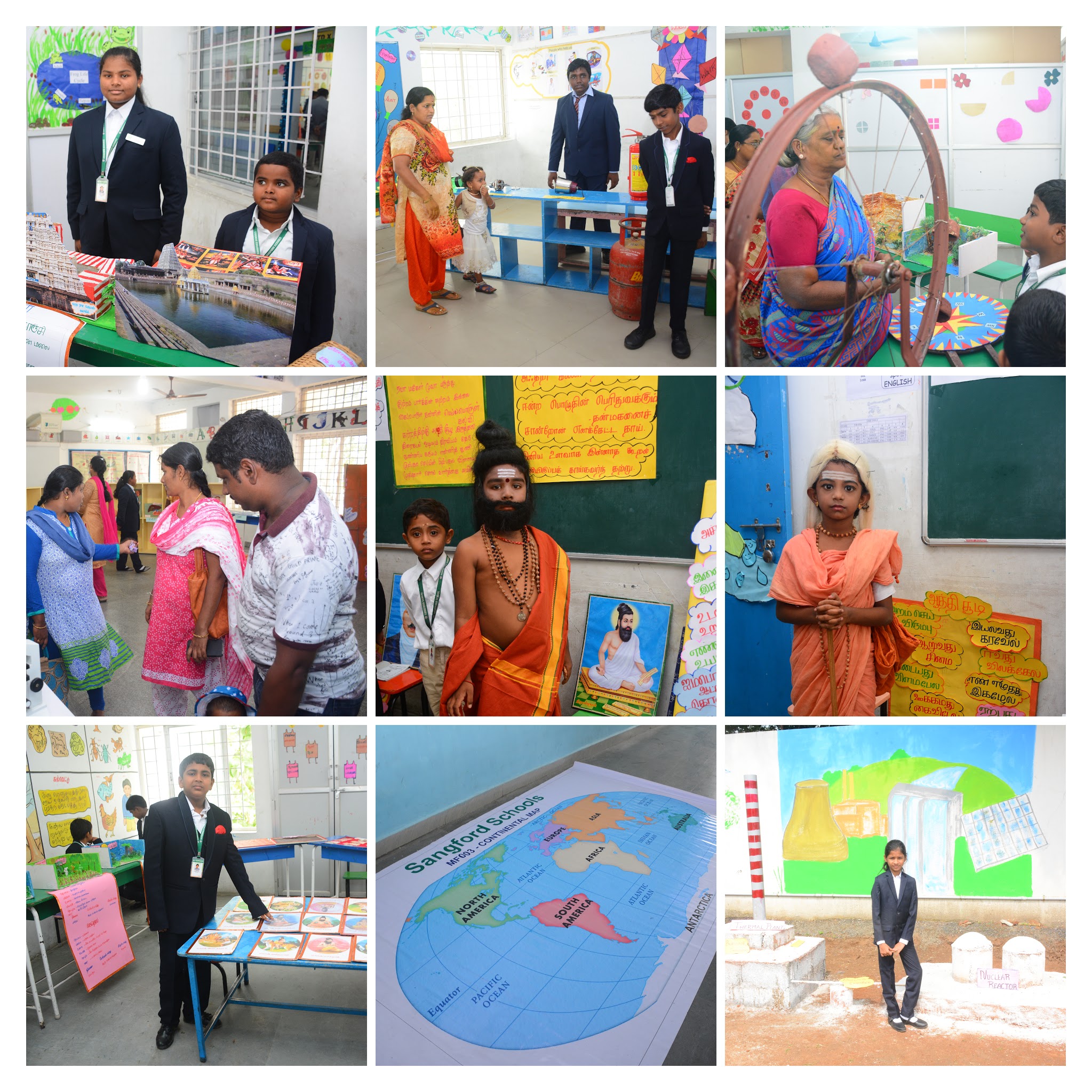
The Walk on the Map activity transforms traditional map learning into a full-body, interactive experience. Students literally step onto a large floor map to explore continents, oceans, countries, and key locations. As shown in the images, students stand, walk, and interact directly with geographic spaces, allowing them to visualize and internalize world geography with ease.

Why It’s Easy to Learn:

Kinesthetic Learning → Students engage physically, strengthening memory and understanding through movement.

Visual-Spatial Connection → Standing on continents helps grasp direction, location, and scale better than textbook maps.

Peer Learning → Small group activities promote teamwork, discussions, and faster recall of continents, oceans, and countries.

Fun & Engaging → Turning geography into a game-like activity reduces boredom and increases attention span.

Immediate Recall → Moving and responding to teacher cues (e.g., “Who’s standing in Africa?”) ensures quick, active participation and long-term retention.

This method makes geography come alive, especially for Social Science learners, blending physical movement with academic knowledge for maximum impact.

Learning Technique – Walk on the Map

Academic Club: Sangford Student’s Model United Nations

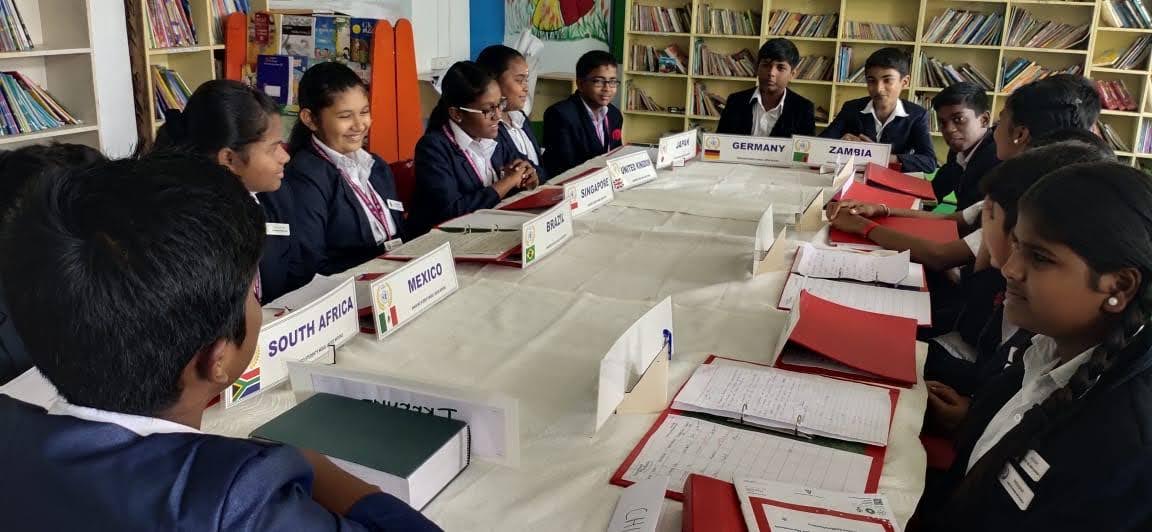
SANGMUN is Sangford’s student-led Model United Nations program designed for learners from Grades 6 to 12. Through simulated UN debates and country representations, students develop essential leadership, diplomacy, and public speaking skills while exploring global issues. SANGMUN transforms classroom learning into a real-world international platform, promoting active listening, negotiation, and solution-oriented dialogue.

Why It’s Easy and Impactful to Learn:

Experiential Learning → Students take on roles of delegates, learning by doing rather than memorizing.

Global Awareness → Exposure to international issues, geography, and current affairs beyond textbooks.

Confidence Building → Regular public speaking practice in a formal yet student-friendly environment.

Leadership Development → Opportunities to role-play as secretaries, chairs, and country delegates.

Critical Thinking → Students practice problem-solving and negotiation, moving from complaint to constructive solution-making.

Real-World Relevance → Equips students with essential skills for debates, interviews, leadership roles, and future careers.

SANGMUN builds articulate communicators, empathetic leaders, and globally aware citizens.

Learning Technique – SANGMUN (Model United Nations)

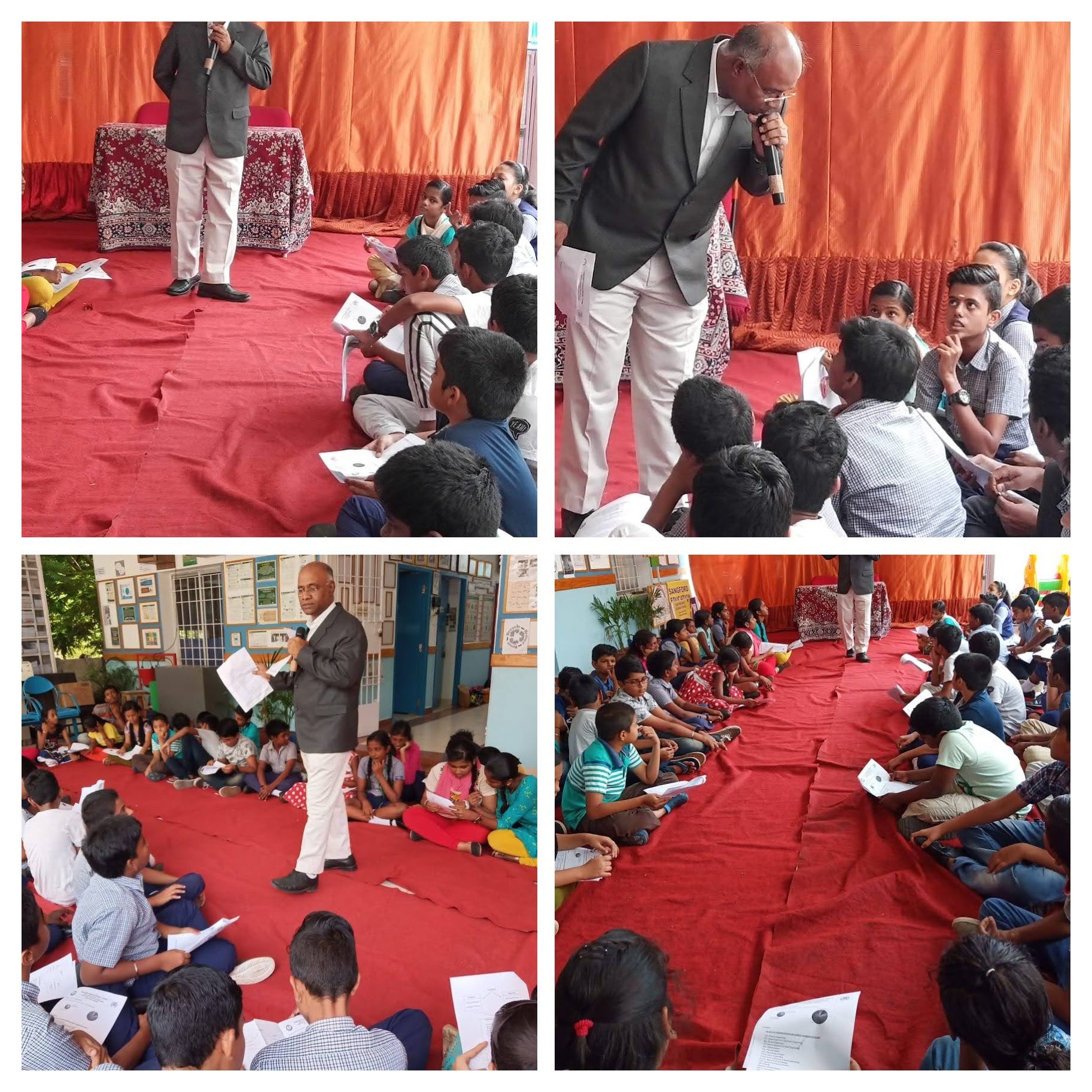
At Sangford, we believe that teaching is the highest form of learning. Our Peer Teaching Framework transforms classrooms into collaborative learning hubs where students take ownership of their knowledge while developing leadership, communication, and academic mastery.

Why Peer Teaching Works:

Active Learning Culture → Students explain concepts to their peers, reinforcing understanding through repetition and discussion.

Leadership Development → High-performing students are selected and trained as Peer Leaders, building leadership, mentorship, and presentation skills.

Collaborative Mastery → Peer teams work together in small groups, ensuring no student is left behind and creating an inclusive, supportive environment.

Frequent Concept Reinforcement → Regular sessions strengthen core concepts across Languages, Maths, and Science — covering grammar, formulas, definitions, and key terminologies.

Holistic Development → Beyond academics, the framework boosts communication, classroom discipline, and team spirit.

Structure of Sangford Peer Teaching:

Peer Leaders (P1–P4) → Guide small teams under teacher supervision.

Full-Day Assessments → Three sessions per year measure reading fluency, verbal expression, formal recall, and conceptual understanding across subjects.

Mandatory By-Heart Practice → Ensures mastery of core concepts, with parental involvement encouraged through structured communication.

Classroom Impact:

Improved academic outcomes

Stronger communication and interpersonal skills

Better exam performance through repeated practice

Enhanced classroom engagement and responsibility

Learning Technique – Peer Teaching Framework

Academic Club: Sangford Tinkering Club

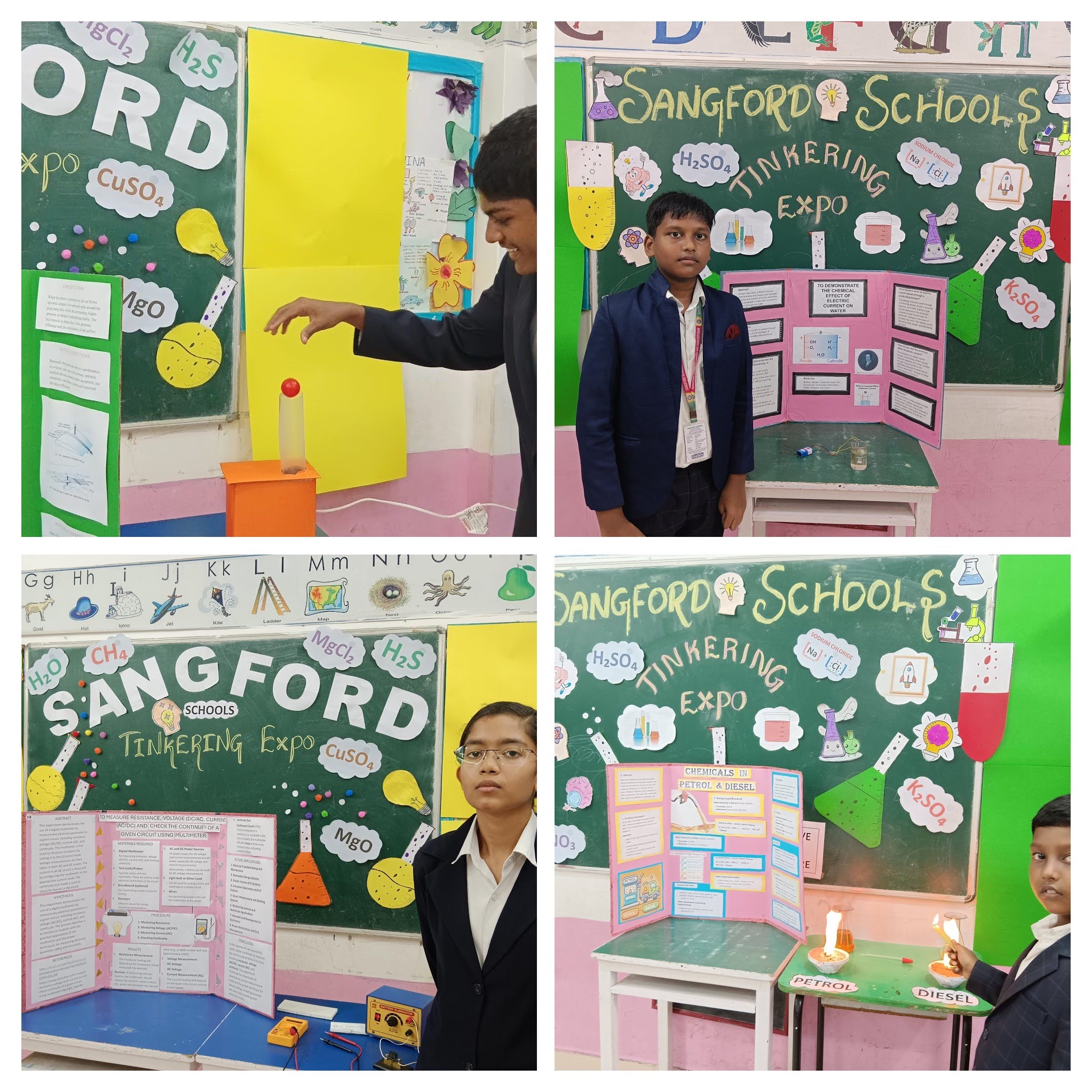
The Sangford Tinkering Club is a dedicated space for students to experiment, build, and innovate using real-world electric, electronic, and chemical circuits—an ongoing hands-on development program rather than a typical science expo. Through guided tinkering, students explore working models of devices, practical wiring systems, and functional physics prototypes that connect textbook theory to real-life applications.

Core Focus Areas:

Physics in Action: Circuit boards, resistors, capacitors, basic motors, and functional gadgets.

Chemistry Integration: Safe chemical experiments to observe reactions within closed systems.

Device Handling: Measuring instruments like voltmeters, ammeters, battery testers, and small experimental apparatus.

Hands-on Skill Development: Building and troubleshooting basic circuits, assembling project boards.

Real-Life Relevance: Linking science to household electronics, automotive wiring, and basic repair concepts.

Learning Benefits:

Develops practical technical skills beyond classroom curriculum.

Encourages self-led discovery and curiosity-driven learning.

Builds foundational knowledge for STEM pathways, engineering, and applied sciences.

Fosters teamwork, creativity, and problem-solving mindset.

This club focuses on “learning by making”, where every student becomes a hands-on explorer of practical science.

Learning Technique – Tinkering Club

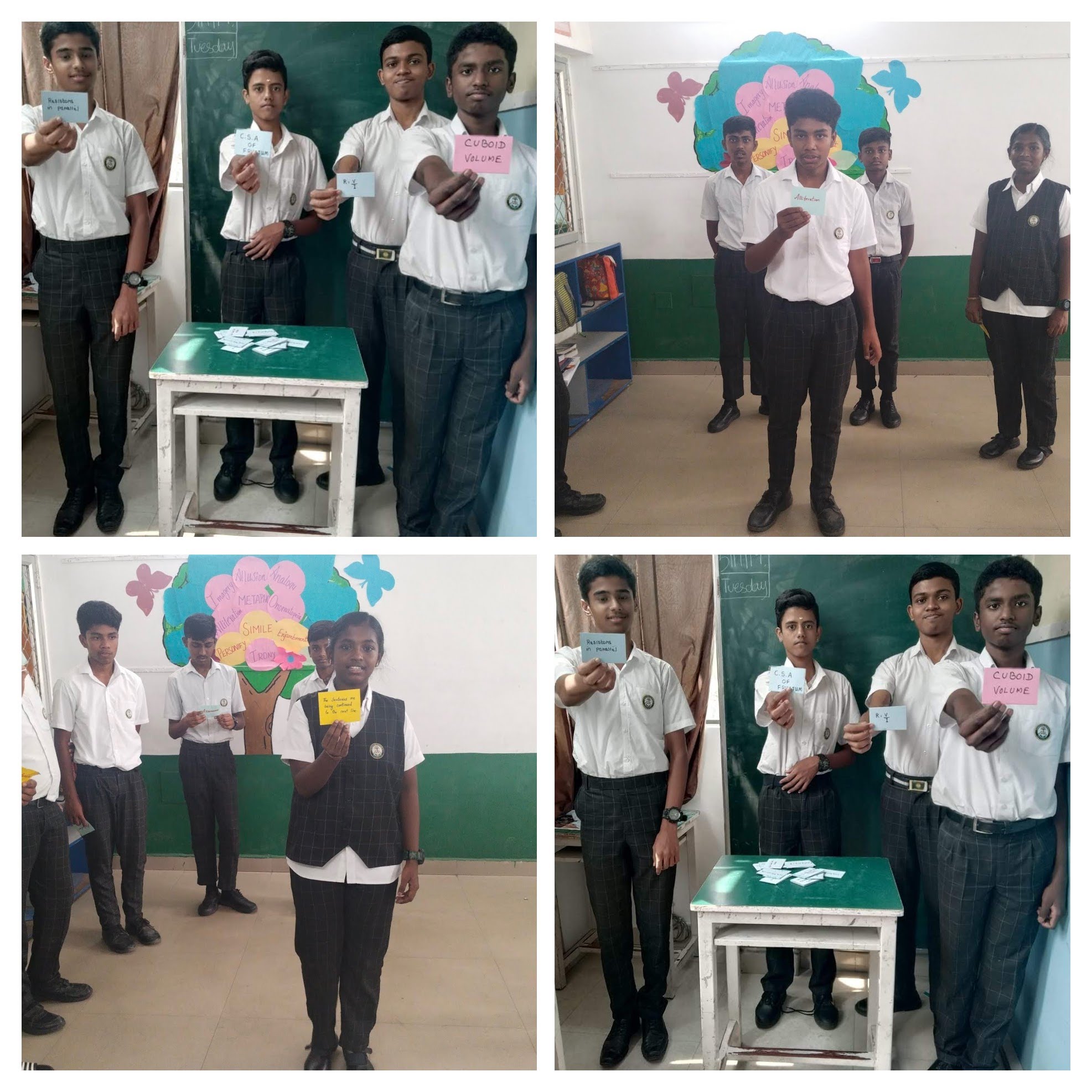
Reciprocal Card learning transforms memorization into an interactive, student-led activity where learners quiz each other using concept, formula, and vocabulary flashcards. As seen in the classroom, students stand in pairs or small groups, drawing cards and explaining terms, formulas, or definitions aloud—reinforcing both understanding and speaking confidence.

Why It’s Easy and Effective to Learn:

Active Recall: Students retrieve answers from memory, strengthening long-term retention of formulas, definitions, and concepts.

Peer Teaching: Teaching or explaining to a partner boosts comprehension and reveals knowledge gaps instantly.

Multi-Subject Use: Perfect for Science formulas, Maths equations, and English/Tamil vocabulary — flexible across subjects.

Quick Daily Practice: Easy to use for warm-ups, revision drills, or classroom energizers.

Speaking & Thinking: Combines verbal expression with subject recall, making learning faster and more engaging.

This method turns traditional rote learning into an engaging peer-practice model, improving speed, accuracy, and exam readiness across subjects.

Learning Technique – Reciprocal Cards

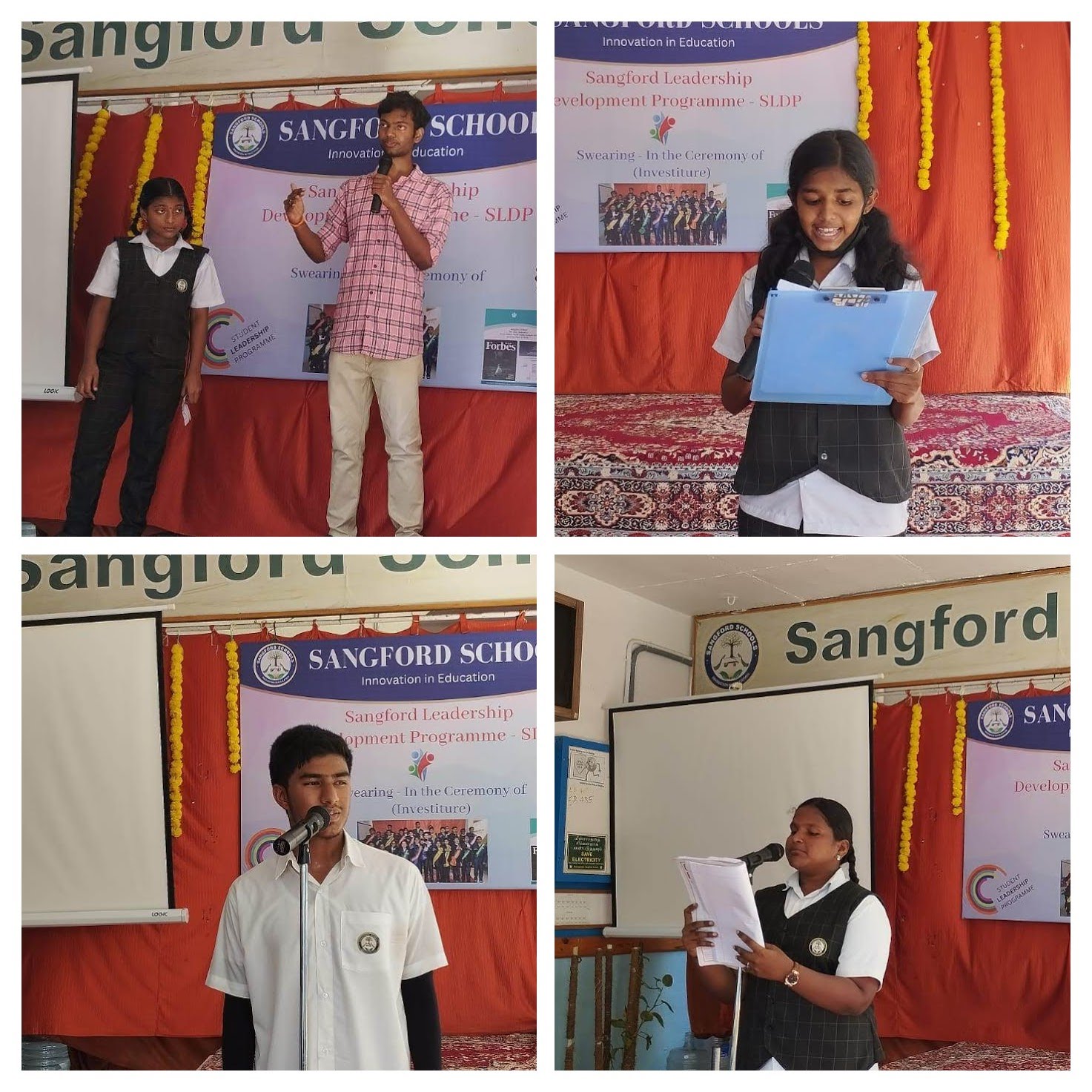
Hygge Time at Sangford is a mindful classroom routine focused on creating warmth, comfort, and connection among students. Inspired by the Danish concept of “hygge” (pronounced hoo-gah), this time is designed for relaxed sharing, positive affirmations, light performances, and community-building activities. It encourages students to pause from academic pressure, express themselves freely, and celebrate small moments of joy.

Why It’s Easy and Impactful:

Boosts Positive Energy: Students practice public speaking in a relaxed environment, promoting happiness and confidence.

Creates Safe Space: Encourages empathy, active listening, and appreciation of classmates’ talents and views.

Strengthens Community Bond: Builds friendships, respect, and a sense of belonging within the classroom.

Encourages Self-Expression: Opportunities to read poems, tell stories, sing, or share thoughts without academic judgment.

Reduces Stress: Brings a calm, feel-good break during the school day, improving focus and motivation.

Hygge Time builds happy learners, confident speakers, and a supportive classroom culture—making every student feel valued and heard.

Learning Technique – Hygge Time

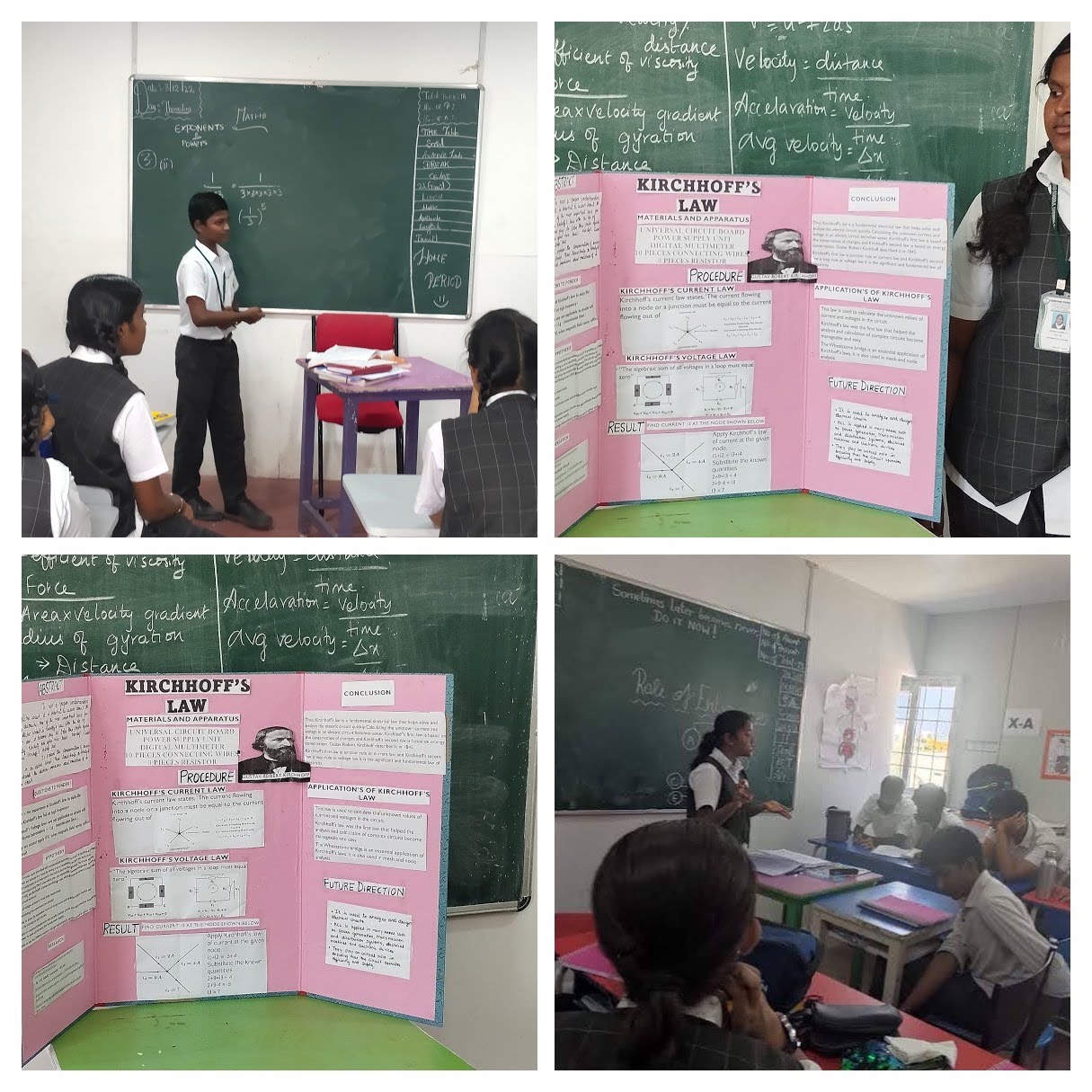
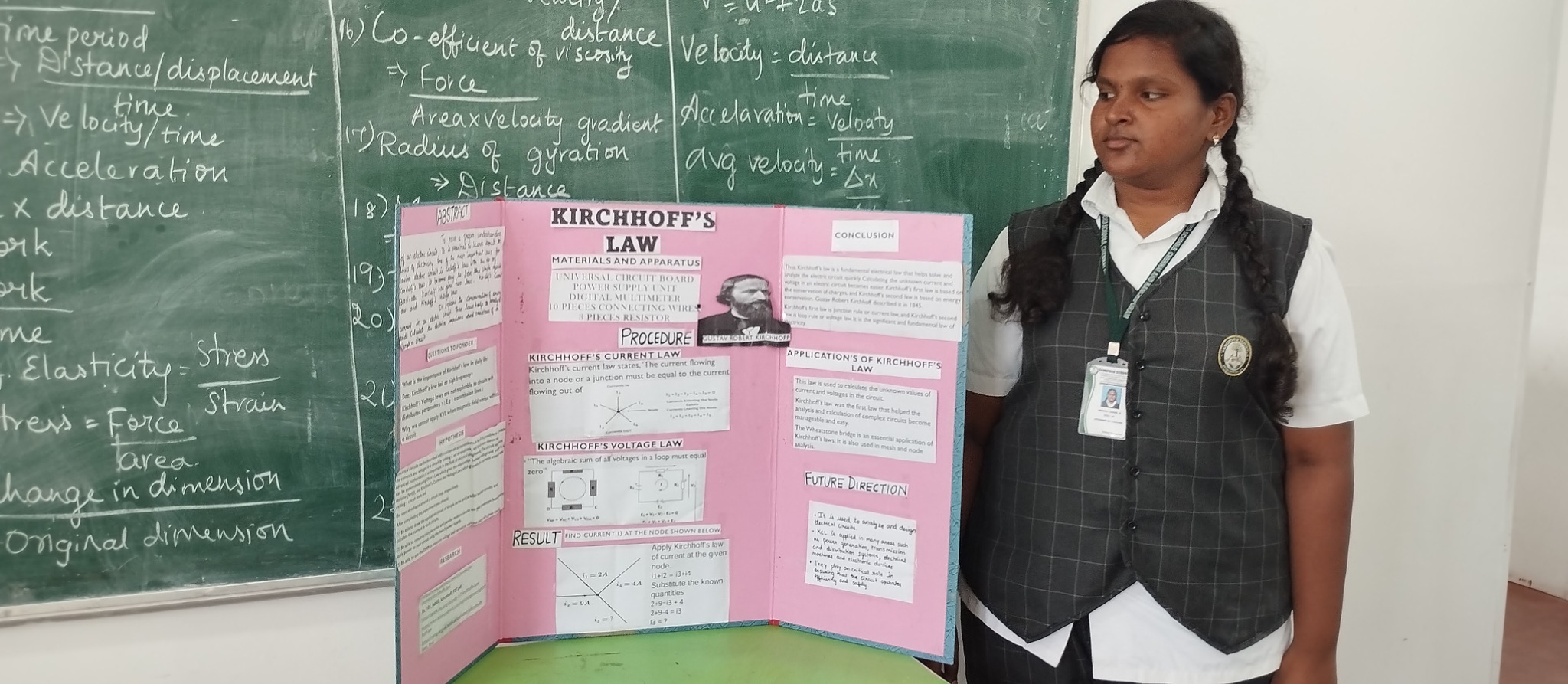
The Feynman Technique is a powerful classroom strategy where students deepen their understanding of a concept by teaching it to their peers. At Sangford, students use this method in Science, Math, and Social Science by explaining topics (like formulas, theories, or historical events) aloud using simple language, boards, or project presentations—proving true mastery through clear explanation.

Why It’s Easy and Effective to Learn:

Learn by Teaching: Students uncover gaps in their own understanding by simplifying and teaching topics.

Deeper Retention: Explaining concepts aloud helps transfer knowledge from short-term to long-term memory.

Boosts Confidence: Regular presentations build speaking skills and student confidence.

Peer Learning: Classmates learn faster when complex topics are explained in friendly, simple terms.

Multi-Subject Use: Perfect for explaining laws in Physics, formulas in Math, definitions in Economics, and processes in Biology.

The Feynman Technique helps students shift from memorizing to true understanding, creating confident learners who can explain any topic with clarity.

Learning Technique – Feynman Technique

Circular Learning is a classroom technique where a key concept or message is passed student-to-student around a circle. The activity starts with the first student receiving the original content, who then passes it verbally to the next student. By the time it reaches the last student, they must repeat the exact concept aloud—proving content clarity, accuracy, and focus within a short time frame.

Why It’s Effective:

Accuracy in Learning: Students must listen carefully and relay only the core message without adding or omitting concepts.

Boosts Listening & Speaking: Develops attentive listening, sharpens pronunciation, and improves verbal retention.

Concept Clarity: Reinforces quick, clear understanding of key academic concepts across subjects.

Peer Accountability: Each student becomes responsible for maintaining knowledge clarity for their classmates.

Time-Efficient: In a short period, the entire group internalizes the same concept, creating shared understanding.

This method transforms passive learning into active group engagement, making difficult topics easy to remember through simple, collaborative repetition.

Learning Technique – Circular Learning

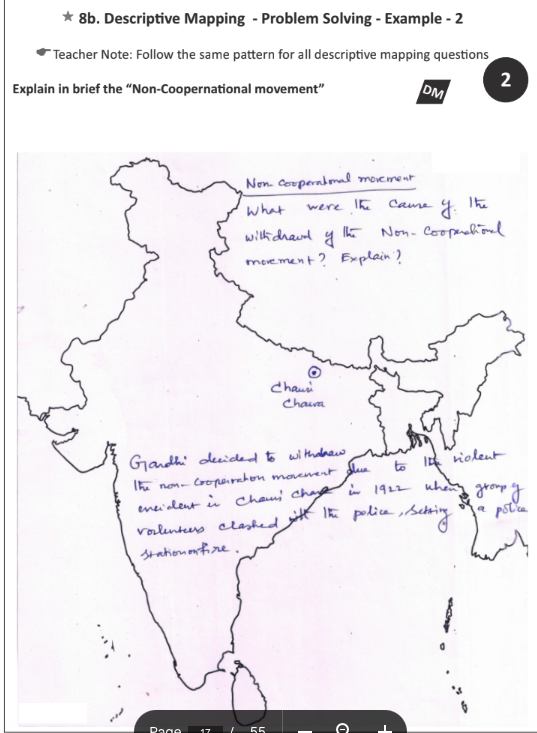
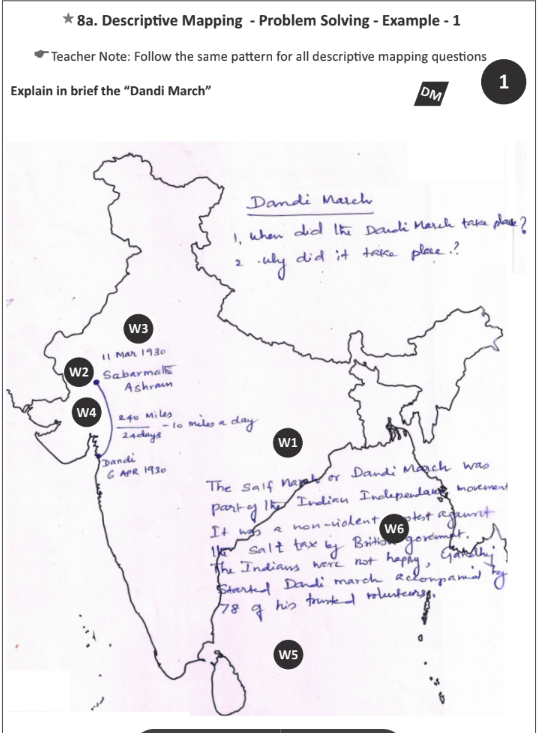
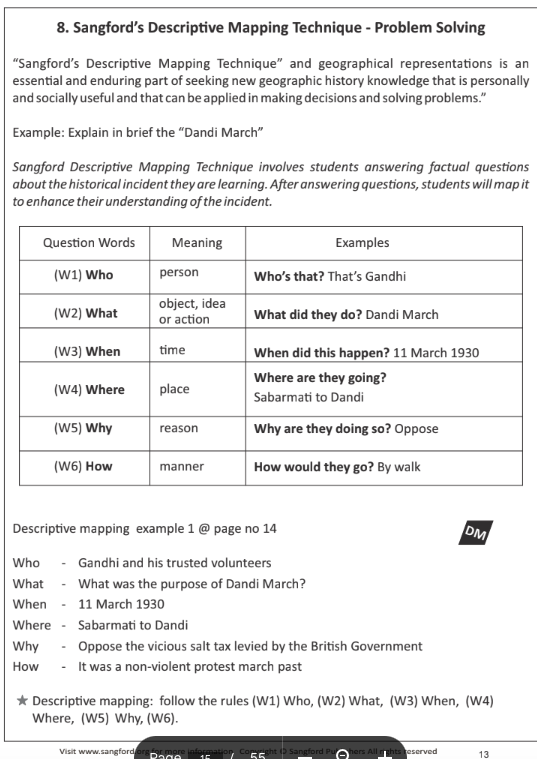
Descriptive Mapping is an innovative classroom strategy where students don’t just answer history questions—they visualize historical events on a map. Instead of memorizing isolated facts, learners connect Who, What, When, Where, Why, and How directly to geographic locations, helping them understand both the event and where it happened.

Why It’s Effective:

Brings History to Life: Students actively plot historical events—adding dates, locations, distances, and key actions on maps.

Boosts Retention: Geographical visualization creates stronger mental connections, improving long-term memory of key historical events.

Enhances Problem-Solving: Students practice structured thinking by answering Who, What, When, Where, Why, and How—leading to deeper comprehension.

Integrates Multiple Skills: Blends history, geography, sequencing, and reasoning into one powerful learning activity.

Promotes Active Learning: Shifts from passive note-taking to hands-on, discussion-based learning in every classroom session.

Descriptive Mapping develops:

Analytical Thinking

Better Writing Skills

Sharper Recall

Greater Exam Readiness

Stronger Real-World Understanding of Historical Events

Why Descriptive Mapping Builds Long-Term Retention:

Multi-Sensory Learning → Students see, write, and speak the content, engaging multiple senses and strengthening memory pathways.

Spatial Anchoring → Mapping locations, distances, and movements builds spatial memory, making it easier to recall facts tied to specific places.

Concept Linkage (5Ws & 1H) → Connecting Who, What, When, Where, Why, and How transforms disconnected data into a structured story.

Active Recall Visualization → Students recall information independently while seeing maps and mental imagery triggers.

Learning Technique – Descriptive & Timeline Mapping

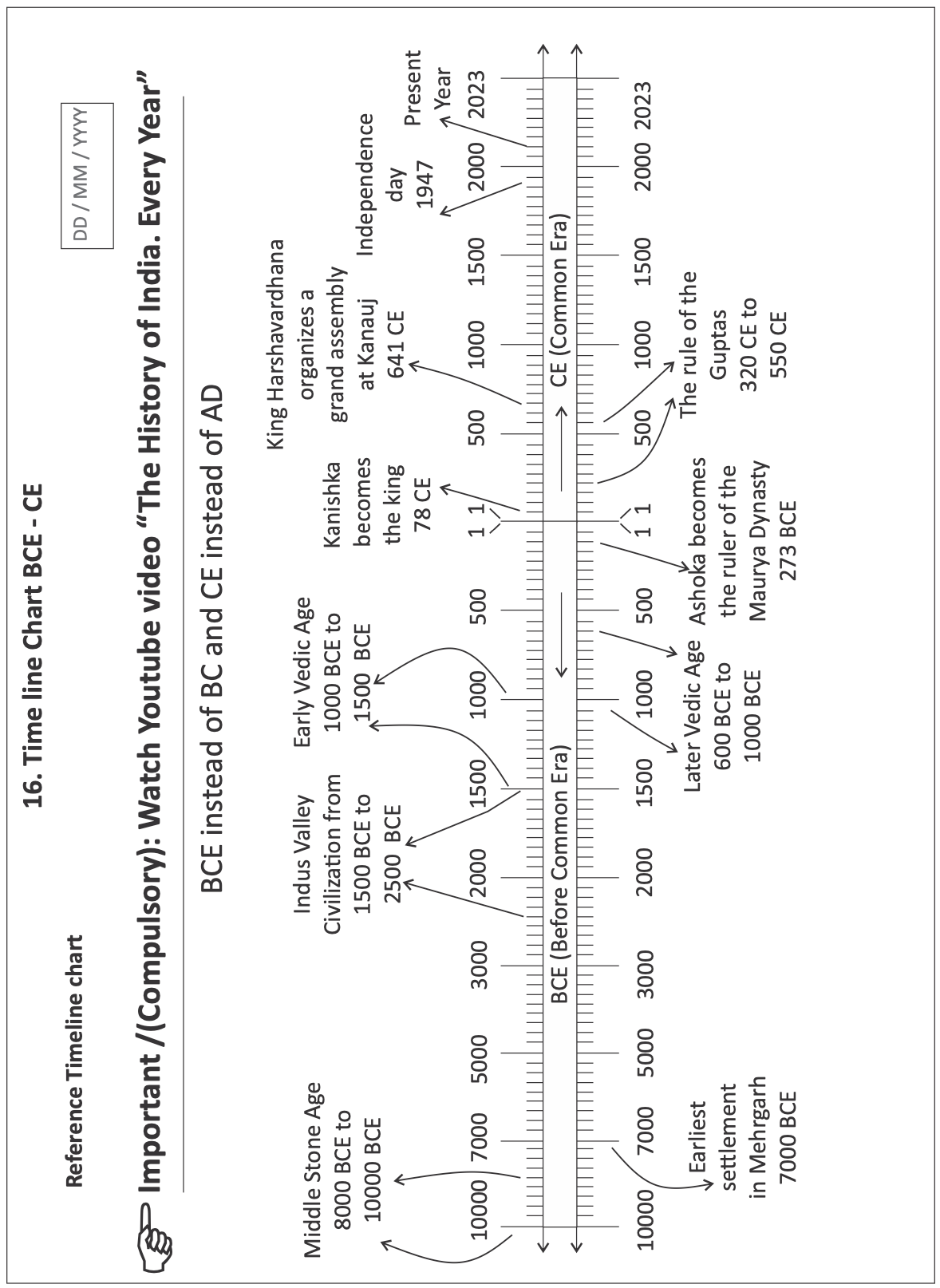
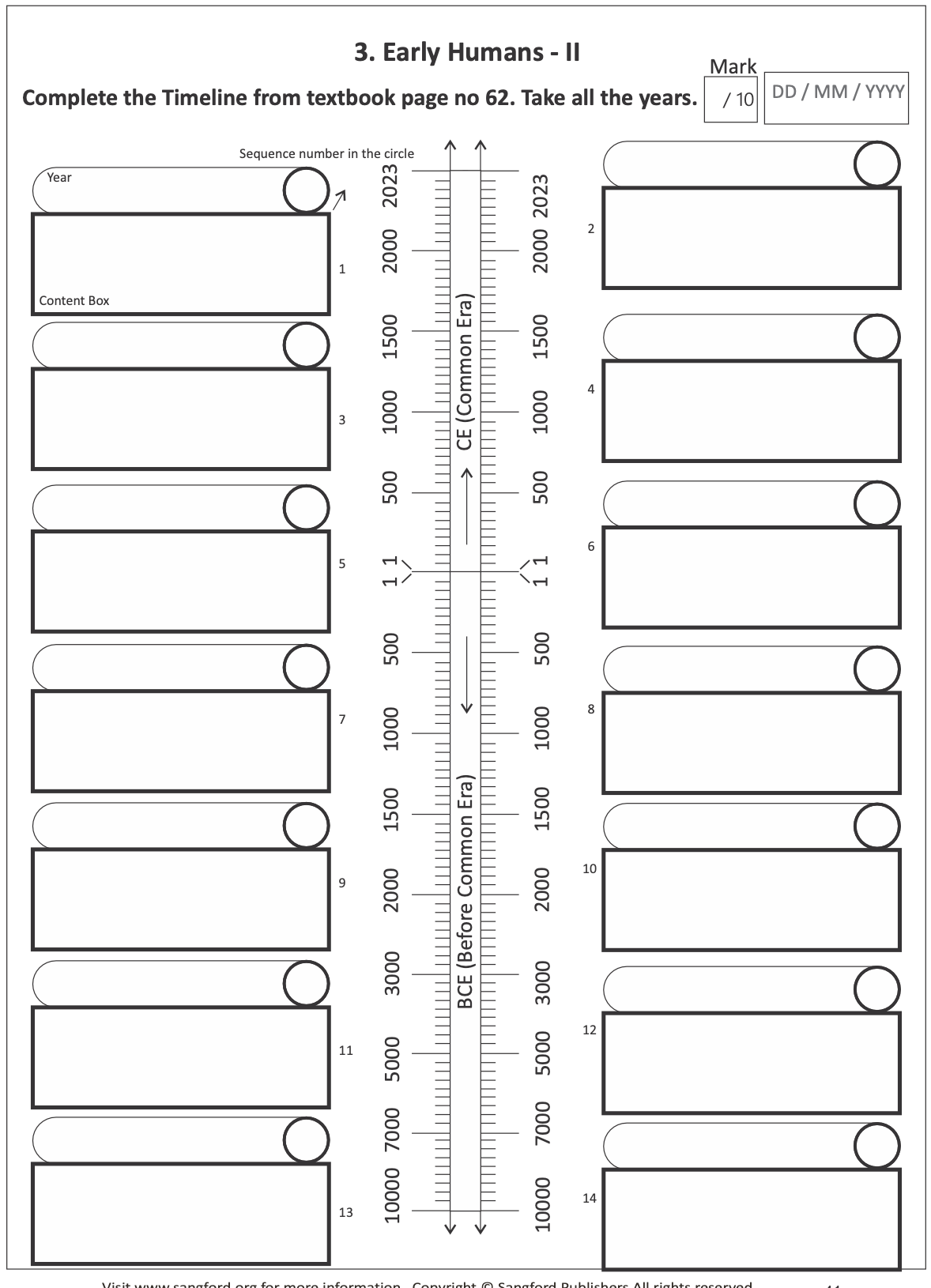
Timeline Mapping is a structured chronological sequencing technique designed to enhance historical literacy by helping students visualize events across BCE (Before Common Era) and CE (Common Era) timeframes. This approach combines time sequencing, event contextualization, and visual learning to strengthen retention and understanding of history.

Why It’s Effective:

Chronological Clarity → Students learn to organize events in proper time order, reducing fragmented understanding.

Visual Memory Activation → Plotting events on a timeline activates spatial memory, helping students recall facts more easily.

Less Cognitive Overload → The timeline acts as a reference tool, simplifying complex data into clear, sequential patterns.

Integrated Thinking → Students develop the ability to connect different periods and topics through a single visual structure.

Timeline Develops:

Better Date Recall → Without last-minute cramming.

Clear Cause-and-Effect Reasoning → Across historical events.

Reduced Dependence on Rote Learning → Encouraging meaningful engagement.

Stronger Chronological Writing Skills → In essays and exams.

Cross-Topic Linkage → Supporting broader thinking beyond individual chapters.

Timeline learning strengthens long-term memory by:

Reinforcing Facts → Through visual sequencing.

Encouraging Active Engagement → Instead of passive memorization.

Improving Conceptual Clarity → By showing relationships between events.

Training Students to Think Historically → With context and continuity.

Timeline Mapping transforms history from memorization into a clear, engaging, and practical learning experience—resulting in higher retention, improved recall, and deeper understanding for students across all grades.

Learning Technique – Timeline Mapping: Chronological Mastery in Social Science

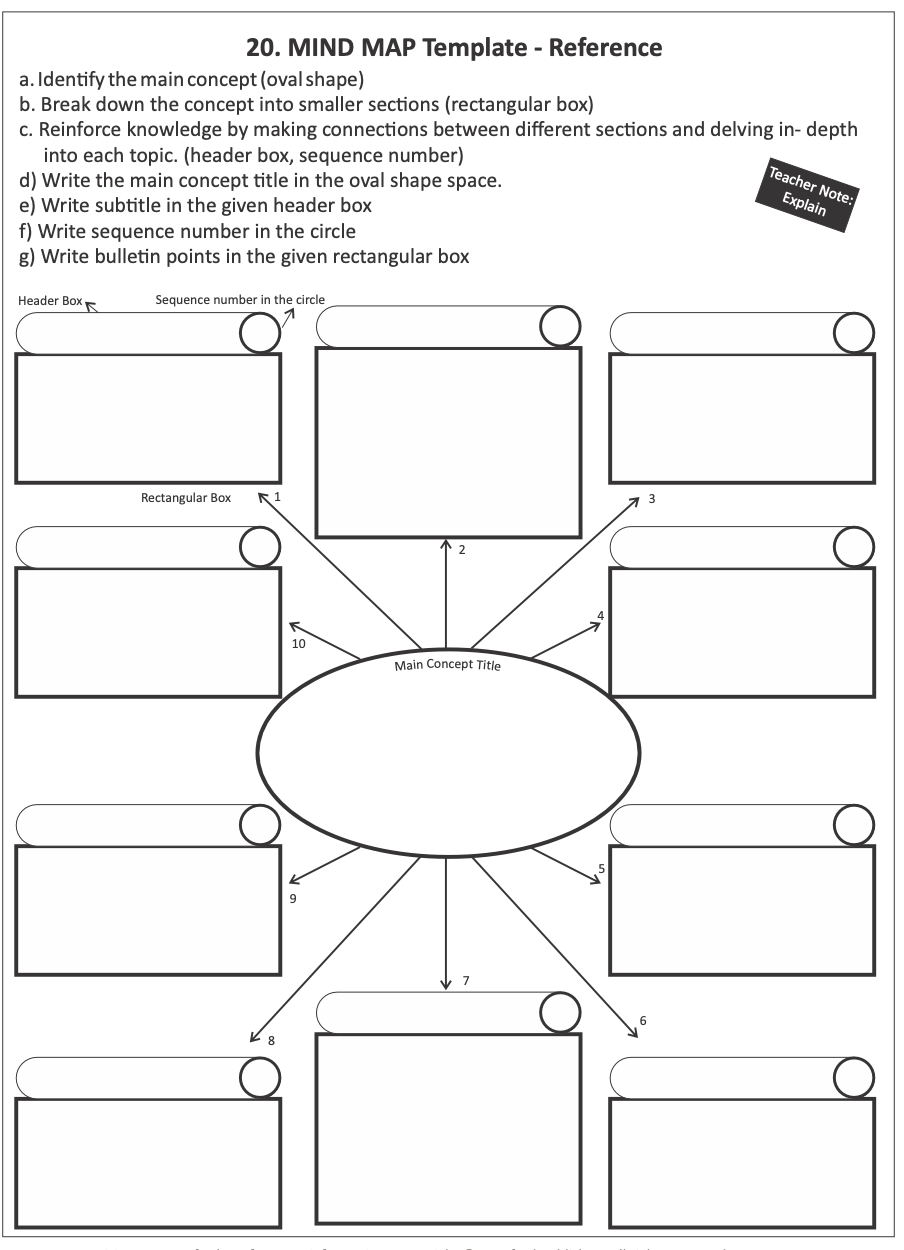
Mind Mapping is a visual learning technique that enhances conceptual clarity and structured thinking by encouraging students to break down complex topics into manageable, interconnected components. This technique develops association networks, reinforcing deeper understanding and improving knowledge retention across all Social Science chapters.

Why It’s Effective

Breaks Complexity into Simplicity → Students deconstruct large topics into smaller, digestible sections.

Activates Visual-Spatial Reasoning → Organizing information in a visual-spatial format strengthens cognitive processing.

Encourages Depth of Thought → By mapping key points and their interconnections, students engage in higher-order thinking beyond surface-level recall.

Reduces Cognitive Overload → Mind Maps present a clean, hierarchical view of a topic, making information easier to organize and retrieve.

Mind Map Practice Develops

Better Concept Retention → Through interconnected structures.

Improved Analytical Thinking → By revealing relationships and hierarchies.

Enhanced Presentation Skills → As Mind Maps aid discussions and presentations.

Reduction in Rote Learning → With stronger understanding of core concepts.

Faster Revision Cycles → For summaries and exam preparation.

The Mind Mapping Technique helps learners see the big picture while mastering the details, ensuring conceptual clarity, analytical depth, and exam-ready proficiency across Social Science and Science subjects.

Learning Technique – Mind Mapping

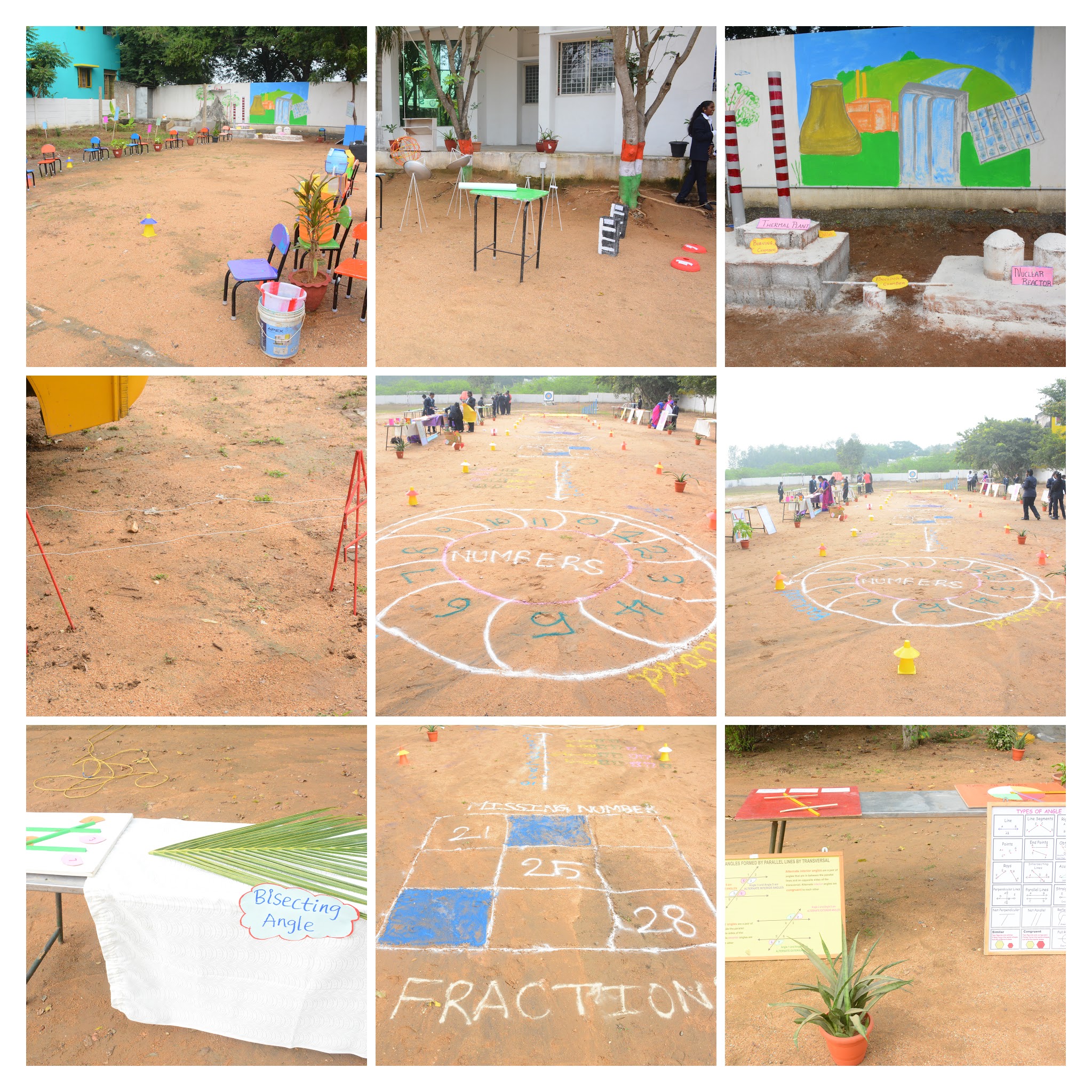
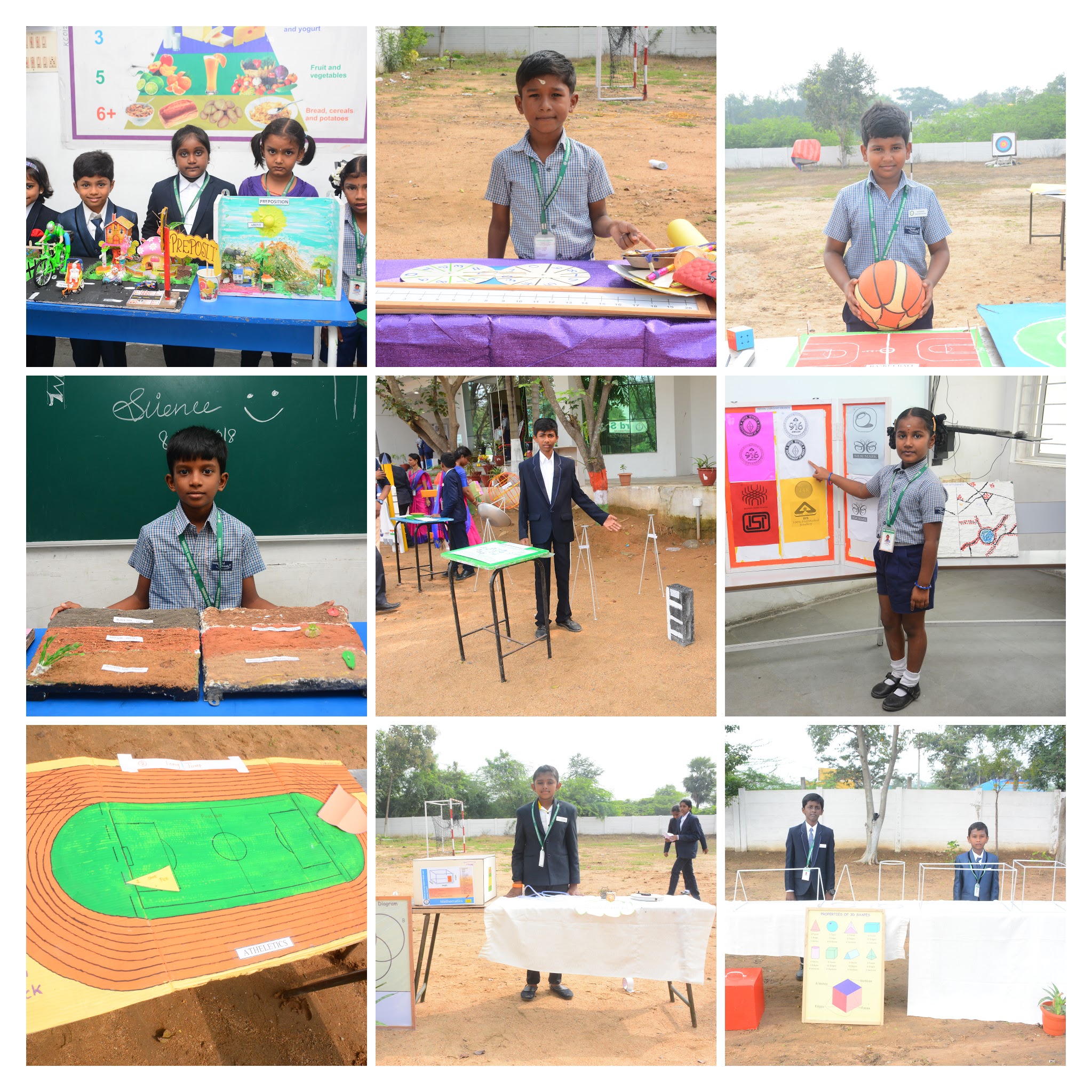
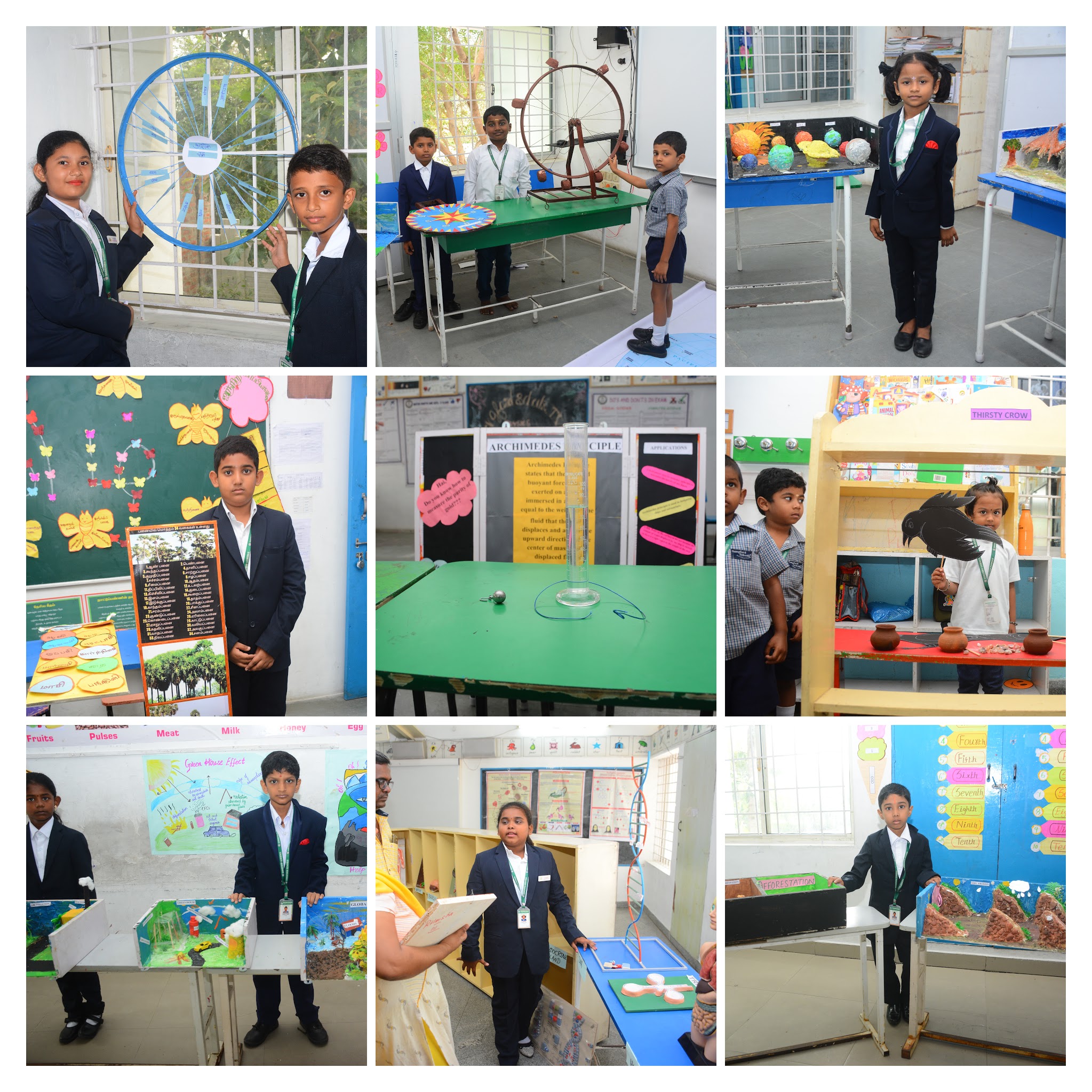
At Sangford, we champion experiential learning through a thoughtfully curated system of practical learning aids and durable models. Our approach moves beyond decorative projects to offer curriculum-anchored, hands-on educational tools that foster deep conceptual understanding in Mathematics, Science, and Social Science from Grades 1 to 12.

Why It’s Effective

Real-World Concept Reinforcement → Students experience real mechanisms and tangible objects, bridging textbook theories with physical, observable outcomes.

Curriculum-Linked, Chapter-Specific Design → Every model aligns with textbook chapters, helping learners grasp abstract ideas through visual and tactile engagement.

Active, Kinesthetic Learning → Handling and experimenting with real objects activates multi-sensory pathways, enhancing memory retention and analytical skills.

Durability for Repeated Use → High-quality, durable materials ensure long-term classroom integration and continual reinforcement of concepts.

What We Use

Mathematics → 3D geometric models, fraction activities, angle bisectors, Venn diagrams, and number games.

Science → Working models of motors, pulleys, energy cycles, thermal plants, force and motion apparatus, biology models with live seeds and specimens.

Social Science → Map-based activities, historical architecture replicas, agricultural samples, resource exhibits, and community models.

Life Skills & Environment → Real tools, disaster-preparedness kits, components for civic safety, energy-saving exhibits, and environmental awareness materials.

Skill Development Through Learning Aids

Concept Mastery → See → Understand → Retain → Apply.

Enhanced Observation & Reasoning → Practical exposure trains students to discover, think critically, and apply knowledge independently.

Through these durable, curriculum-linked aids, students experience deeper learning and long-term conceptual clarity across subjects.

Learning Techniques – Concept-Embedded Practical Models
Back to top